A Weekend in Oslo: Chasing the Last of Summer’s Light in Norway
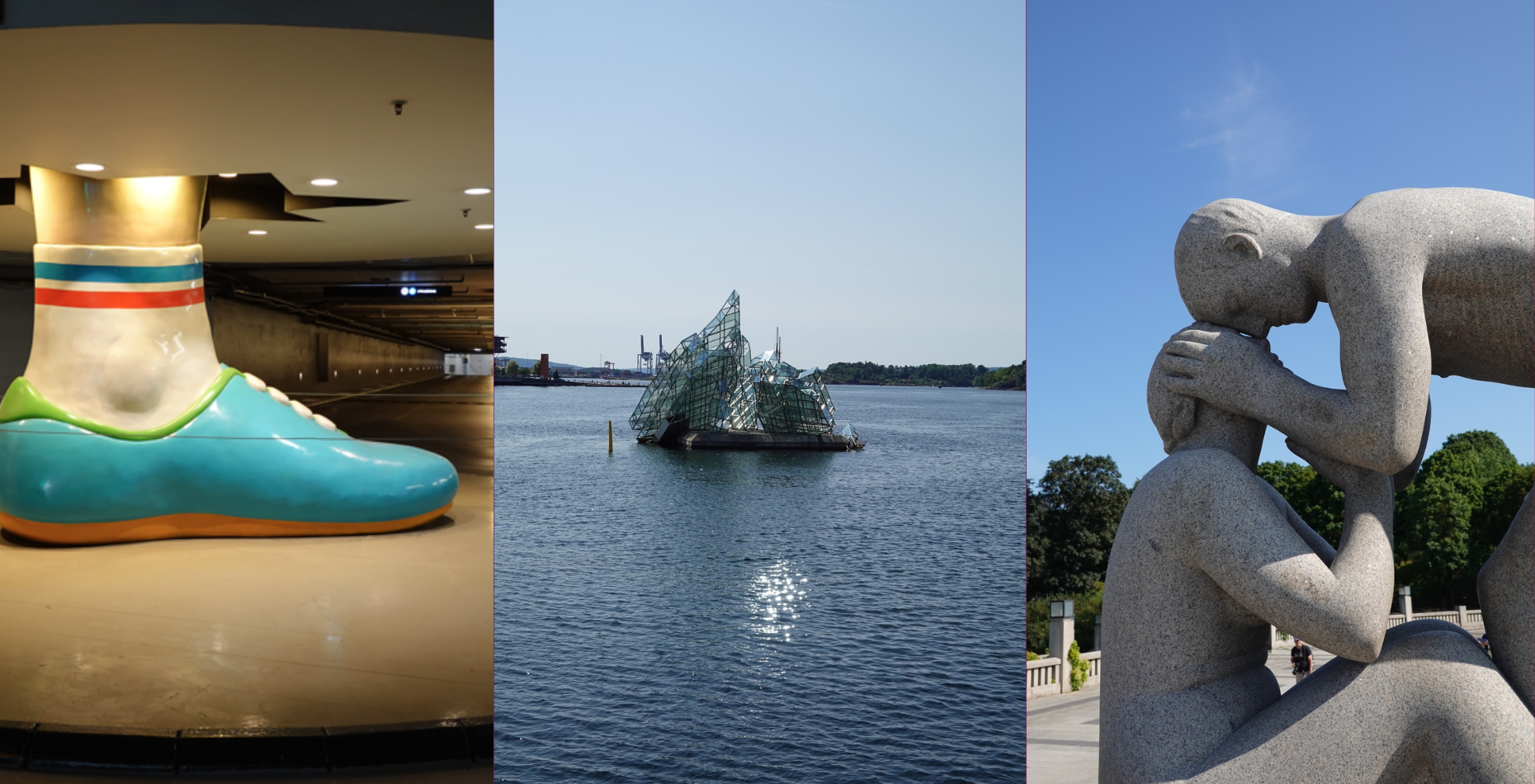
I told a friend that I was going to spend a long summer weekend in Oslo, the sparkling waterfront capital of Norway. He rolled his eyes and said, “Ugh. Oslo is nothing but museums and sculpture.”
You know what? He is absolutely right. And I can’t think of a better way to spend a weekend.
Turns out that Oslo is a young and vibrant city with very happy townsfolk. The work/life balance thing seems to be going very well for the locals and that well-being is expressed in the exuberant outdoor art, hip restaurants, and thriving youth culture you find here.
It must be said that we had absolutely perfect weather for our visit, so our favorite activity was hanging by the waterfront to watch all the beautiful people go by.
And apparently, we weren’t the only ones—seemingly every local felt the same way.
They showed up in droves to bask in the long (sunset happened around 10 pm) days and have a swim in the ice cold fjords.

How to Spend Your Time
Live like an Oslovian
All along the Oslo promenade float the “hottest” Nordic trend—saunas. There are loads of stationary and floating saunas to choose from.
Sightsee up and down the waterway, get hot and steamy, and then plunge into the icy cold waters of the fjord to refresh.
Book your sauna experience here or visit Salt, a large communal sauna where socializing is the main draw.

Get Married
The Oslo City Hall was perhaps the biggest surprise of the trip. While the exterior is a simple, red-brick Brutalist design, the interior is a showstopper. Grounded by marble floors and stairs, the walls and ceilings are lushly painted with stories and motifs from Norwegian history.
Book a 45-minute guided tour for more information on the architecture and art in this working public building.
And yes, this is where the locals go to get married.


Score a Backstage Tour of the Operahuset
Home of both the Norwegian National Opera and the Ballet, the Oslo Opera House is an architectural stunner. Designed by the firm Snohetta to resemble a glacier, it has a walkable Carrara marble roof that spills directly into the water below it.
(FYI—Snohetta also designed the National September 11 Memorial Museum Pavilion in NYC).
As dramatic as the exterior is, don’t skip going inside to see the huge undulated wooden wall and the art installation by Olafur Eliasson.
While inside, ask if you can get a backstage tour. My favorite part was seeing the inner workings—wig shops, costumes, and even some mock-ups of past set designs.


Visit a Very Unstuffy Library
The Deichman Public Library, designed by architectural firms Lundhagem and Atelier Oslo, sits next to the opera house and the Munch museum.
It feels more like a super cool bookstore or coffee shop than a stuffy old library. Beyond the book collection, the library houses features such as a cinema, a recording studio, and ample space to read and relax.

Hit up a few museums
Oslo does have more than its fair share of museums…they even have one dedicated to skiing…so you do have to pick and choose.
My favorites were:
With a large and varied collection and several works by Edvard Munch, The National Museum is well worth a visit. They have two versions (there are eight in total) of what is considered to be the world’s most famous piece of art, Munch’s The Scream.
Besides art, the museum houses interesting collections of Norwegian furnishing, artifacts, and fashion to browse.

The Norsk Folkemuseum felt like it could be a tourist trap, but it turned out to be a trip highlight!
There are 160 historical buildings on the site that have been moved here from regions across Norway, and a walk through the property gives you a taste of life and local traditions. The 1200’s Gol Stave Church alone was worth the price of the ticket.
I may be a geek about looking at old buildings, but my husband loved it, too.


More of an homage to a single man rather than a museum, Frogner Park celebrates the sculptures of Gustav Vigeland, a rather vocal rival of Edvard Munch.
The park itself is overwhelming at 110 acres, with Vigeland’s sculptures covering 80 of those. I would highly recommend getting a tour guide to walk you through the most interesting parts and to spill the juicy gossip about the strife between Vigeland and Munch.


Where to Stay
We stayed at arty The Thief, with incredible views of the waterfront. Our room was terrific and the hotel is well-located, but the hipster vibe is strong with this one, so if you aren’t into that, see below.
Next time I might try Sommero, a little further off the main drag and close to Frogner Park. I love the Wiener Werkstätte design style.

What to Eat
Solsiden, right on the water below the old town, serves up great views alongside the freshest seafood and towering platters of shellfish.
Just a quick stroll along the harbor from many of the sights, Fiskeriet is the perfect post-museum lunch. If the weather is good, get a table outside and order the fish and chips and salmon mousse.
After lunch at Fiskeriet (or if you just need a break between museums), stop in at Paradis for an ice cream. There are several locations around the waterfront area, but be prepared to wait. Everyone had a cone in hand as they strolled the waterfront

About 20 minutes outside of Oslo is Smalhans, an unassuming restaurant serving delicious “home cooked” food.
The menu changes constantly as Smalhans only sources the freshest local ingredients.
With its tiny staff and simple surroundings, it feels like Sunday supper at your friend’s house—if your friend was an incredible chef. Don’t miss this one.

If I’m perfectly honest, I loved Oslo. Would I rush back? No. Over three days I covered all the highlights plus spent lots of lovely time just walking. I’m very glad I did it…but now it’s on to the next great place.