Frame It Right: Why the Frame Matters (Almost) as Much as the Art
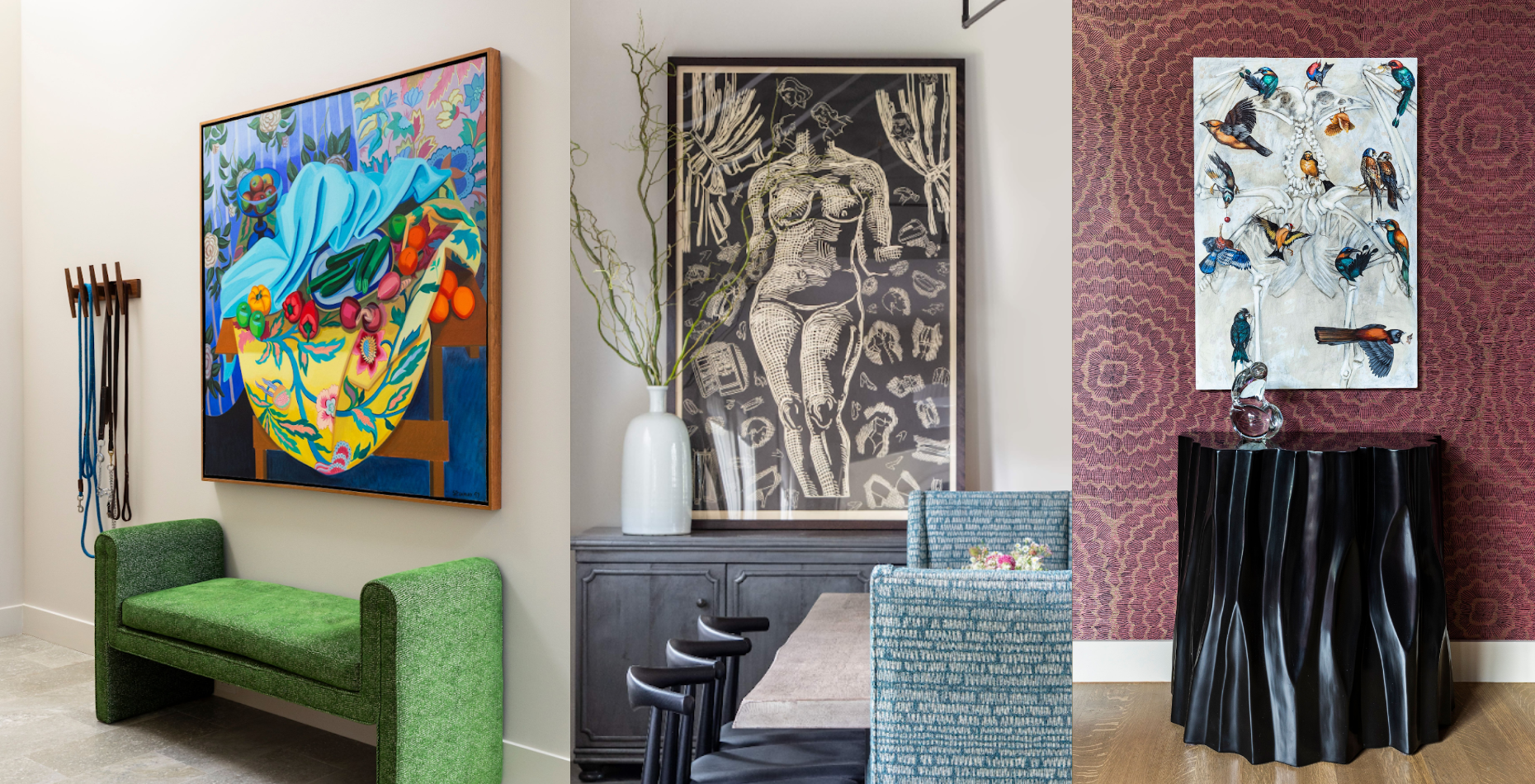
Art has the power to take a well-designed home from beautiful to transformative. It brings personality, color, and a sense of story that reflects who you are.
We tend to pour a great deal of thought into the art we choose, but how you frame your pieces can have just as much impact. When you invest in art, the goal is to build a collection over time, so frame with the long haul in mind. The frame should enhance the piece itself, rather than simply match the style of the room around it.
The Technical Stuff (worth knowing, so let’s get it out of the way)
- Choose the right glass: Use Conservation Clear or Museum Glass for UV protection. The first is clear and shiny and the second is non-reflective and more expensive.
- Oil paintings don’t need glass: These pieces are sturdier and leaving them unglazed allows the texture of the paint to shine.
- Sunlight is not your friend: More delicate watercolors or textiles can fade in direct sunlight, even with UV protection.
- Go acid-free: Both matting and backing should be acid-free to properly preserve your artwork.
PRO TIP: Don’t skimp. A skilled framer is priceless and can guide you toward the best materials and techniques for every piece in your collection.
Matting vs. Floating
Matting gives your art room to breathe and naturally draws the eye toward the image. Smaller pieces look great with wider mats, but larger works don’t generally need as much surrounding space. When it comes to color, stick with white or off-white mats. Colorful mats tend to date quickly, and can distract from the art itself.

Floating makes the entire work appear as though it’s hovering within the frame. The glass sits slightly off the surface giving the art an airy, modern presence. This technique works particularly well with deckled edges or full-bleed paint paintings, where the details are begging to be fully seen.

Choosing the Frame
Most pieces look beautiful in simple white or light oak frames—they are clean, understated, and timeless. Because the frame isn’t competing for attention, the artwork can move effortlessly from room to room and play well with the decor in any space.

If you’re craving more impact, a simple metallic frame in gold or silver leaf brings a touch of elegance and warmth without overwhelming the artwork.


Dark wood or metal frames add contrast and weight. They work especially well with bold or black and white artwork.


Ornate frames can echo the texture and movement of more expressive pieces. The heavy carving or gilding adds gravitas to small scale works and they can be a thought-provoking juxtaposition to contemporary paintings.


PRO TIP: When you take a piece to your framer, take the time to explore a few different frame options. You will know you’ve found the right frame when it makes your artwork pop.
When Not to Frame
Sometimes the artist’s intent—or the material itself—calls for leaving a work unframed. Pieces painted on wood or metal panels, for example, often don’t need any additional adornment. And if the artist has painted the edges of the canvas, those details are meant to be seen and should be left exposed. When in doubt, consult with the gallery or the artist before framing.


Whether you choose something sleek and contemporary or go for a bold, statement-making profile, selecting the frame is an important step in showcasing your art. It is an opportunity to put your personal stamp on the work and to shape a collection that is uniquely yours.


