Travel Guide: Perfectly Patagonia…and beyond
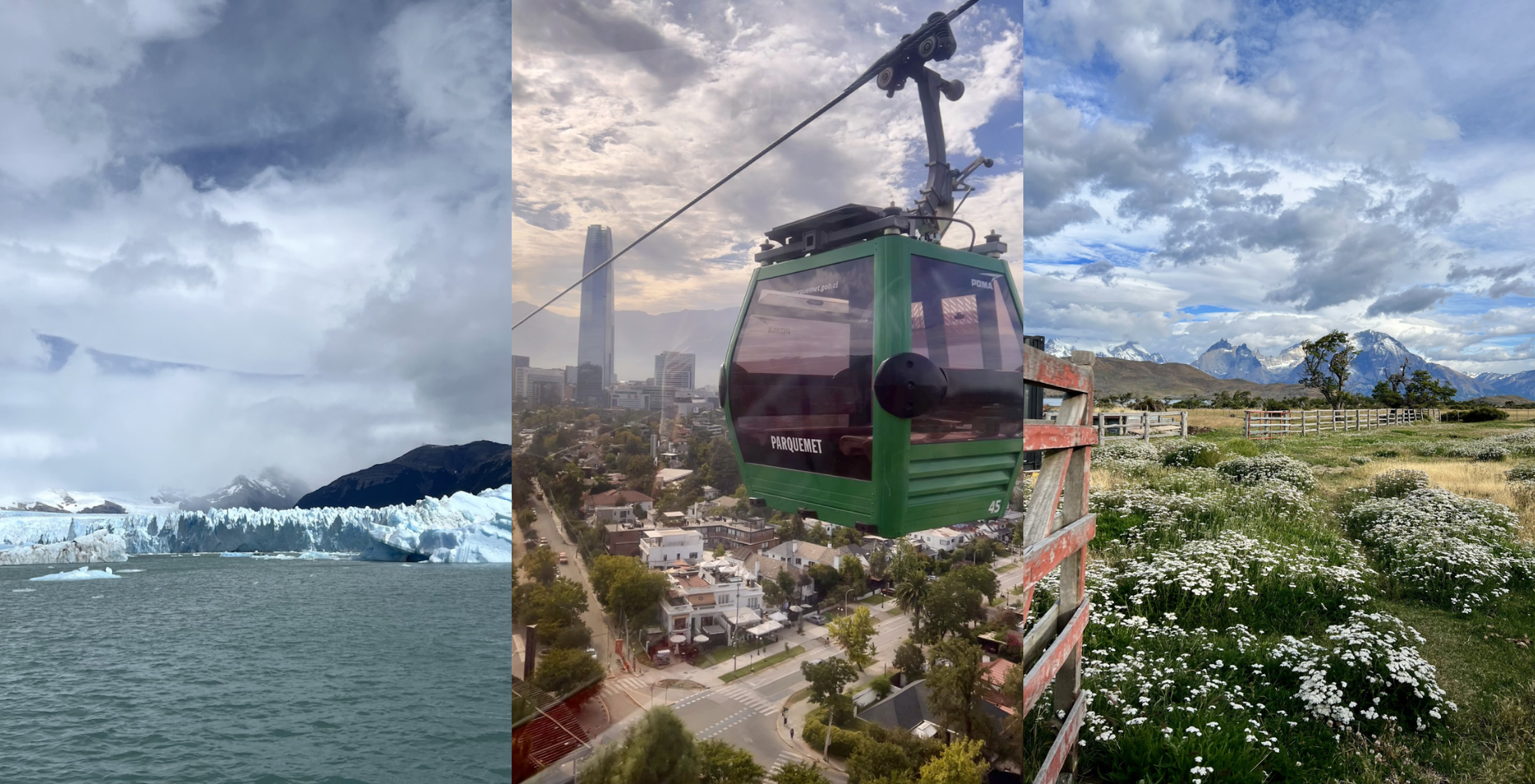
I’m just back from two weeks in Argentina and Chile, and it was truly maravilloso. With craggy granite towers, jaw-dropping icebergs, and miles of untamed wilderness, Patagonia in particular is unlike anywhere else on earth. If you’ve been dreaming about South America, I’m sharing a few things to know before you go.
When To Go
I traveled in early February, and the timing was mostly spot on. Days in the cities were hot but we got lots of wind and the occasional chill once we headed into the countryside. A word of warning: February is peak summer for South Americans, which means a LOT of the people were soaking up vacation. The Lake District towns were especially bustling. If crowds aren’t your thing, aim for January (or December if you really want to have the place to yourself).
Where To Go
Patagonia is big. Enormous, actually. It would take a month or more to truly see it all, and for most of us, that kind of time spent away from home isn’t an option. Choices have to be made. If I were doing it over again, I would plant my flag firmly in Chile, starting in Santiago and heading south from there.
Buenos Aires, Argentina
Our trip began in Buenos Aires, Argentina – nicknamed the ‘Paris of the South,’ which, honestly, feels like a stretch. It doesn’t make my must-see list, but many tours start here, so if you find yourself with time in BA, these two things are not to be missed: the La Recoleta Cemetery (home to Evita Perón’s mausoleum) and the Rojo Tango show.
The Recoleta Cemetery is fascinating. If you actually want to spend eternity there, you’ll need a real estate agent and an architect, and well over $50k for a small plot. Design and construction fees are extra, naturally. Oh, and your family would need to maintain it in perpetuity or it can be resold (after a respectful period of time) to the next highest bidder.
Each mausoleum is the unique vision of the owner. Some are sleek and contemporary, while others are a Rococo dream dripping in pink marble scroll work. I highly suggest spending a shady morning wandering through the cemetery – it’s delightful.


I was skeptical about going to see a tango show, but Rojo Tango alone made the trip to Buenos Aires worthwhile. It is sultry and sexy and the athleticism of the dancers is incredible. You will leave with your heart pounding!


Ushuaia, Argentina
From BA we flew four hours south to Ushuaia – a tiny town at the bottom of Argentina. Billed as “the end of the world,” it is the primary departure point for most of the Antarctic cruises if that happens to be on your bucket list.
For me, the real draw is that Ushuaia is close to the penguin colonies on Isla Martillo, which is reachable by boat and absolutely worth the effort it takes to get there. Those little tuxedoed birds have a flippant elegance that is such a delight. While you can’t get off the boat, you are very close to them, and they are just as curious about you as you are about them.


If you go to Ushuaia, dinner at Kalma is a must. Unassuming from the outside, but the kitchen focuses on local ingredients and it was hands down one of the best meals we had the entire trip.
I highly suggest a stay at the Arakur Ushuaia Resort & Spa. Perched outside of town with stunning views overlooking the Beagle channel, it has the look of an isolated sanatorium on approach, but inside it is warm and elegant and has the most lovely pool and spa.


El Calafate, Argentina
Next up on the itinerary was El Calafate, a pretty little town on Lake Argentino that serves as the gateway to Los Glaciares National Park and the Perito Moreno and Upsala glaciers. Its proximity to those landmarks does make El Calafate a bit touristy, but you don’t need more than a day or two here. You can take a boat to the base of the glaciers, where chunks of ice calving off from the face is an exhilarating sight. There is also a wonderful catwalk where you can view different angles of the glacier from terra firma.
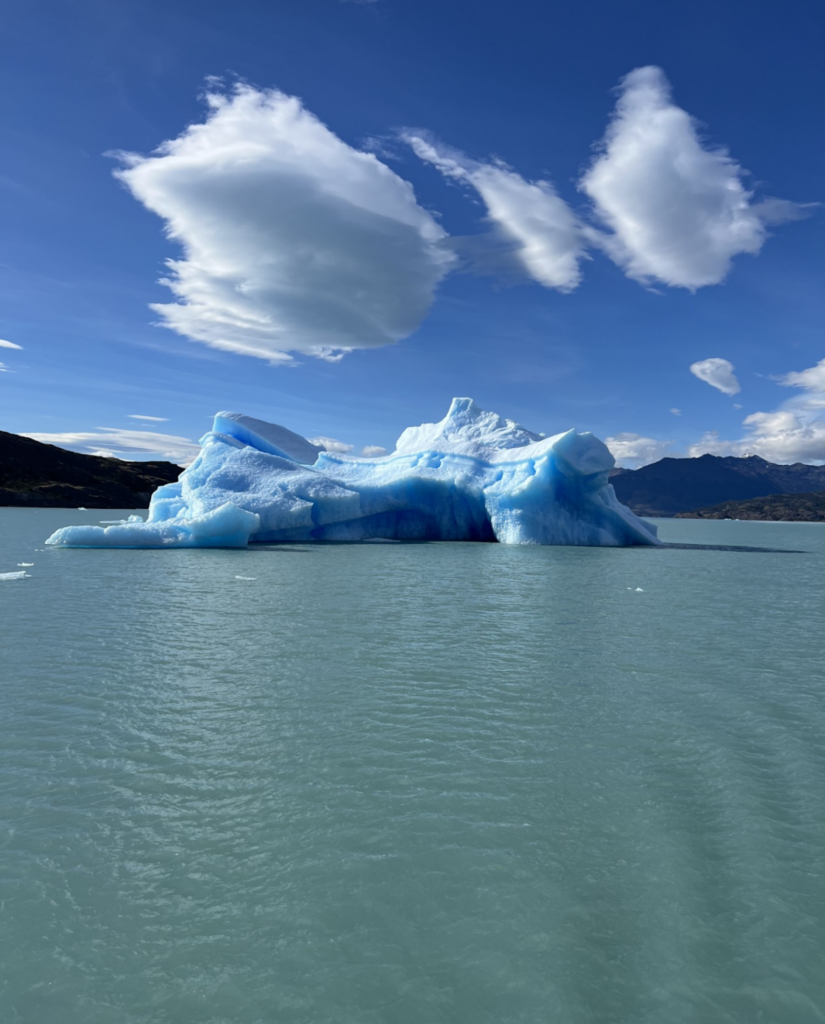


Leaving El Calafate, we went by car from Argentina to Chile. The drive only took a few hours along empty roads, and the landscape was dotted with rheas (Patagonian ostrich) and guanaco (Patagonian llama).

Torres de Paine National Park
Arriving in Torres de Paine National Park (pronounced Pine-eh no matter how many times my husband said Pain) we got our first views of the Torres de Paine Massif, and the dramatic “horns” at the center of the range. This is a landscape so compelling that I would have happily spent days watching the colors change as the clouds rolled in and out of the summit’s folds.

But Patagonia is all about being active, and there is no shortage of things to keep you busy.
We hiked up to a spectacularly blue glacier lake…


Rode horses with gauchos…


And explored the lonely, rugged terrain of the Baguales region.


Our home base in Torres de Paine was Tierra Patagonia, a stunning hotel that blurs the lines between the natural landscape and the built environment. Designed by Chilean architect Cazu Zegers and constructed almost entirely of local lenga wood, the hotel is more an artistic expression than a structure.

But don’t let the commitment to ecological design fool you. Tierra Patagonia is full on, understated luxury. There is an enormous indoor pool, a small but sumptuous spa, and delicious cuisine. The creme brulee was a work of art and the best I’ve ever had. And to make your experience as seamless as possible, their team of guides meets with you on arrival to help you plan and execute your excursions, so you can relax and enjoy all the area has to offer.


As hard as it was to leave Torres de Paine, off we went to the Lake District where we spent two days hiking beneath the snow capped Villarica volcano and getting sprayed by the vertiginous waterfalls Salto La China and Salto el Leon.


Unfortunately, the main town of Pucon was utterly overrun with tourists enjoying the height of South American summer holidays–go karting, eating ice cream, and dragging beach paraphernalia from shops to the lakeside. I had anxiety induced flashbacks to Myrtle Beach, South Carolina where my family vacationed when I was a kid.
Had I realized how busy the area would be, I would have gone in December or January to avoid the crowds. It really is a lovely place with pristine lakes and forests of the oddly beautiful Monkey Puzzle (Araucana) tree which is only found in a few places in the world.


Thankfully, we did have the delightful andBeyond Vira Vira to escape to at the end of each day. Set on a lush walkable 34-acre estate with its own garden and cheese making facility, the hotel is full of cozy textiles and rich colors. Adding to the comfort is the delicious food and the very friendly and capable staff.


Santiago, Chile
At the end of the trip we visited Santiago for one night, although I’m sorry we didn’t spend longer there. The city feels young and vibrant, with big parks and public art everywhere. We made the most of our time with a ride up the cable car to Cerro San Cristóbal, where the Virgin Mary keeps a watchful eye over the city and the panoramic views are nothing short of spectacular, followed by a quick city tour.


A stop at one of the city’s pretty squares, Plaza de Armas revealed the enormous Metropolitan Cathedral, a confection of pink marble and French design.


The perfect way to spend a final afternoon in Santiago? A visit to the Santa Rita Vineyard. We had a delicious lunch in the old family mansion before touring the expansive grounds and tasting the wines.


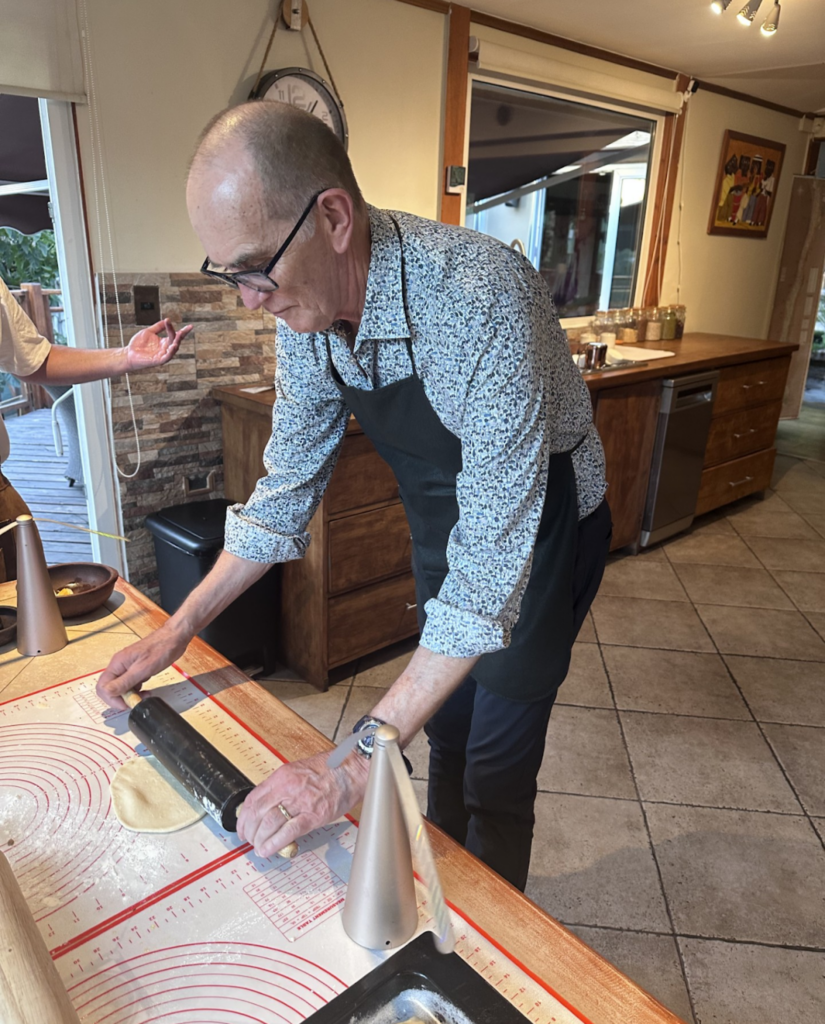
Our final experience was perhaps one of our very best. We drove above the city to Chef Carolina’s own home for a cooking class that turned into so much more. Yes, we learned how to make empanadas and pisco sours. But the most interesting part was chatting with Chef and her husband as we cooked. It was such a fun cultural experience, and we loved spending time learning more about Chile with a few locals.

What to Wear
The single best piece of advice I can give you: bring layers. The weather throughout Patagonia is continually shifting between warm sunshine, sleet, and gale-force winds almost without notice, so be prepared for everything. More than once I found myself abandoning any sense of style and pulling on pretty much every layer I had packed just to survive the wind and the rain! Glamorous it is not, but prepared you will be.
A few specifics to add to your suitcase:
- 1 nicer dress or trouser for dinners in the big cities
- 1 nicer pair of jeans or pants for dinners and travel days
- 2 pair of hiking pants
- 1 rain jacket that can also act as a windbreaker, preferably long enough to cover your upper thigh
- 1 pair of rain pants
- 1 light weight puffer jacket
- 2 or 3 fleece tops or sweaters
- Miscellaneous t-shirts and hiking shirts
- Hats, gloves, and a neck buff or scarf
- 3 pair of shoes–a hiking shoe or boot (for, well, hiking), a cute/casual sneaker (for travel days, evenings, and walking around towns), and a pair of ballet flats (for dinners or whenever you are tired of your other shoes)
- A backpack to carry your layers in–you will be constantly adding and removing layers and you need a place to store them

What to Bring Home
We are always searching for unique, hand made objects to bring home with us as a reminder of our trip. At the hotel Vira Vira in Pucon we spotted the most beautiful textiles and wall hangings made by a local artist, Sandra Rojos (@telares_sandrarojos). We bought one of her plush woolen throws with an abstract Monkey Puzzle tree embroidered on the corner, and it now sits at the foot of the bed in our guest room.
In Santiago we met a charming artist @delarosaarte who carves handsome sculptures out of stone. From him we purchased three stone “people” based on the Chemamull–large wooden figures that the Mapuche people made as guides into the spirit world. And we simply couldn’t resist one of his hand-carved granite bulls!
Each of these very affordable pieces of art will bring us lovely memories for a long time to come. And hearing from the artists how much these purchases meant to them makes us feel even happier about bringing them home.


Where to Visit Next Time
After spending a few days at the Hotel Magnolia in Santiago, I really want to see the Atacama Desert for more hiking, star gazing, and the stunning Mars-like scenery. The Tierra Atacama hotel is already on my radar, and I can’t wait to book a stay.
From there, I would head back to Torres de Paine and the Tierra Patagonia hotel. We should have stayed at least 5 days the first time. There is so much to see!
And finally, I would like to stop and see Valparaiso–a Unesco World Culture Heritage site know for its funiculars and brightly colored streets.


